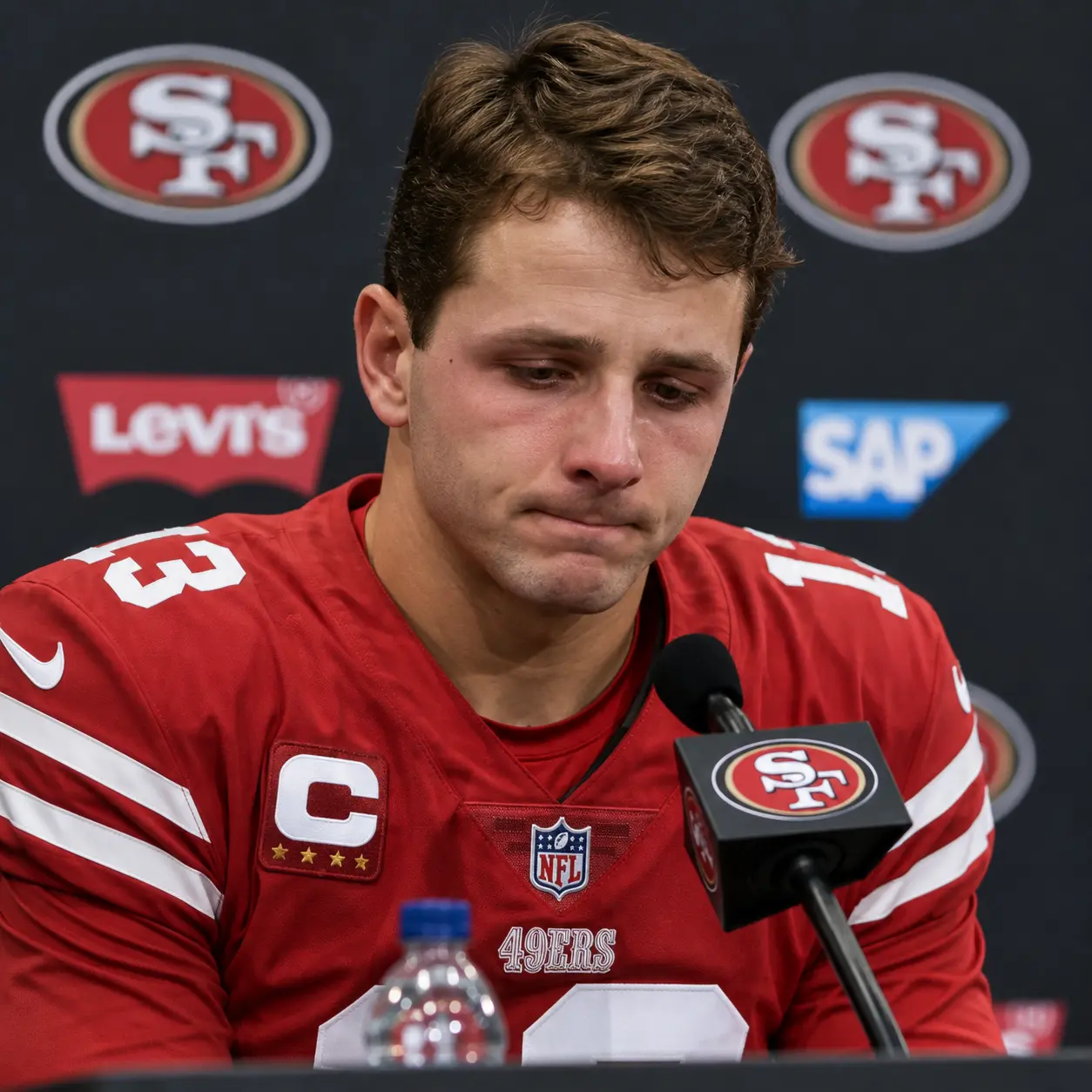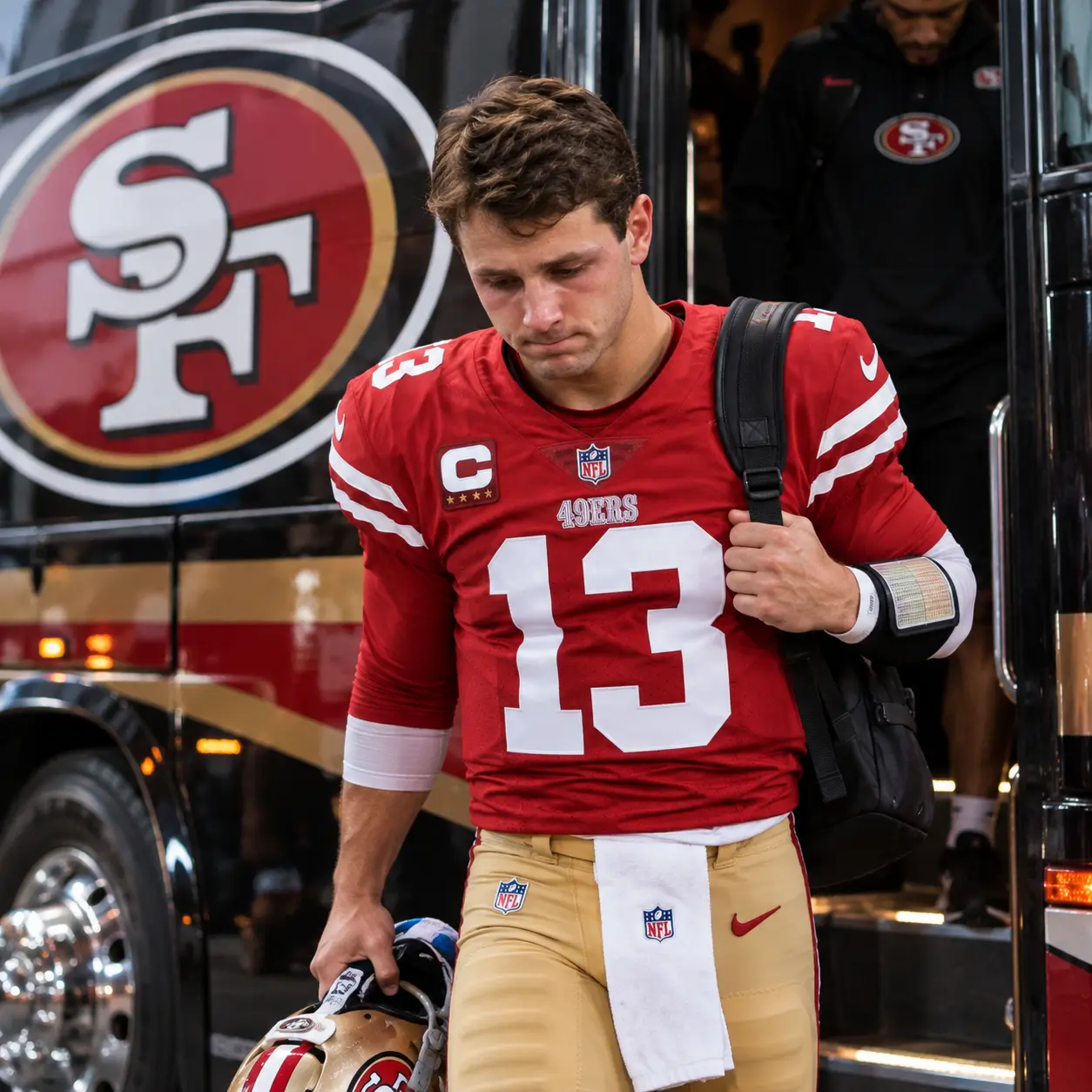
🚨💔 BREAKING NEWS IN SAN FRANCISCO: BROCK PURDY'S SOMBER TEAM-BUS IMAGE SPARKS AN EMOTIONAL QUESTION - WHAT IS THE 49ERS QUARTERBACK REALLY CARRYING BEHIND THE SPOTLIGHT?
SAN FRANCISCO - One image. One lowered head. One quarterback surrounded by the colors of a franchise that expects nothing less than greatness. The image of Brock Purdy stepping away from a San Francisco 49ers team bus with a somber expression captures something that football fans understand instinctively: even the most celebrated athletes can appear vulnerable when the noise of competition fades.
But the image itself is an artistic illustration, not evidence of an emotional incident. The more revealing story lies in what Purdy has actually experienced on the field, particularly during San Francisco's dramatic 32-29 victory over the Seattle Seahawks on October 11.
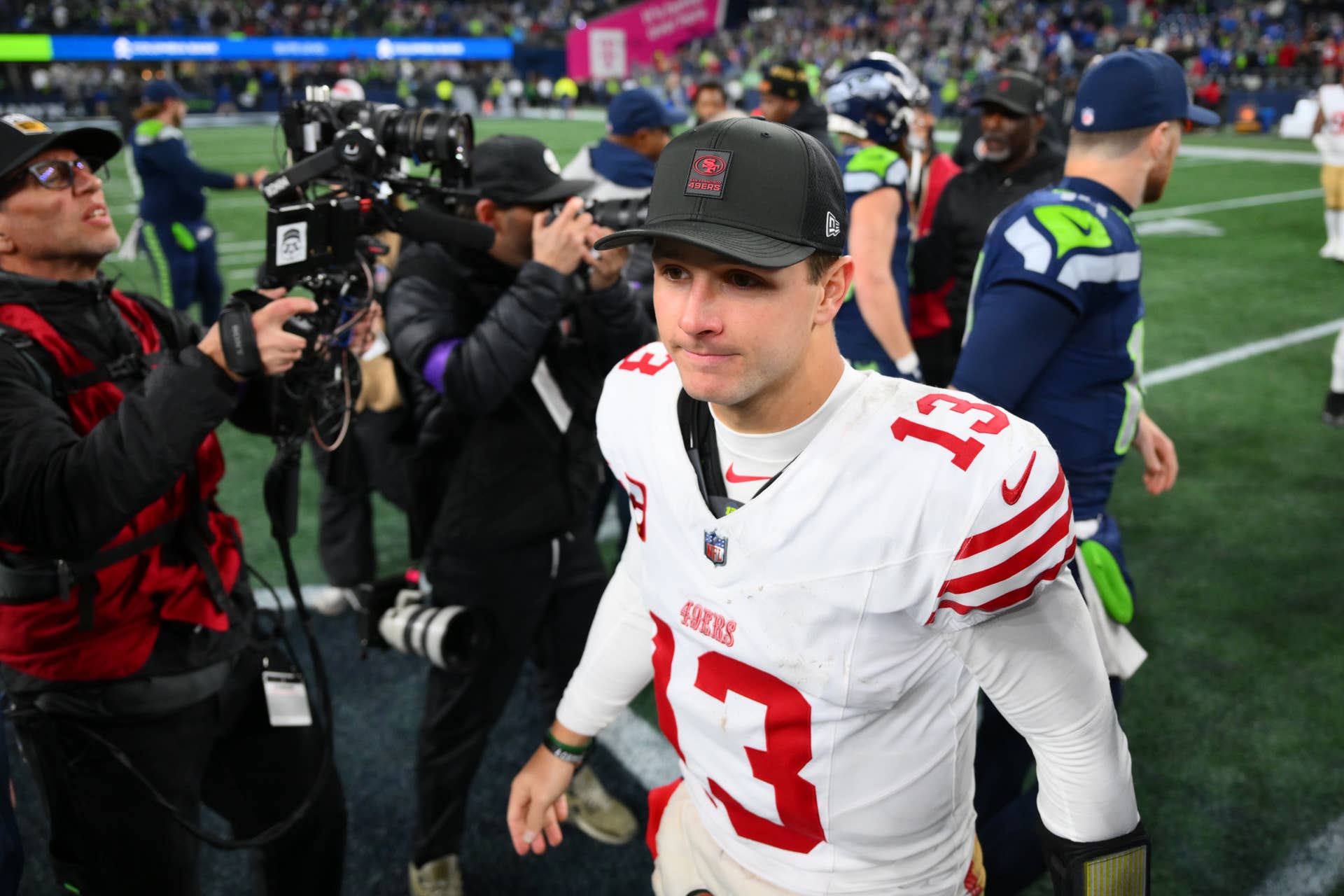
To understand the weight carried by San Francisco's quarterback, consider the extraordinary circumstances surrounding that victory. The 49ers entered one of the NFL's most intimidating environments, Lumen Field, to face their fierce NFC West rivals. Seattle's defense attacked aggressively, the crowd roared, and the momentum shifted repeatedly.
By the final whistle, the 49ers had survived, preserving their unbeaten 5-0 record. Purdy completed 19 of 29 passes for 189 yards and two touchdowns. It was not a flawless performance. He was intercepted once and endured three sacks, reminders that even an accomplished quarterback can be vulnerable against a disciplined defense.
For some players, an ugly victory is simply another win. For a franchise quarterback, it can become an invitation for relentless scrutiny.

Purdy knows that scrutiny better than most. His career began with one of the most unlikely introductions imaginable. Selected with the final pick of the 2022 NFL Draft, he entered the league with little of the fanfare reserved for highly touted quarterbacks. Expectations were modest. Opportunities were uncertain. Nothing about his draft position suggested that he would eventually become the face of San Francisco's offense.
Yet he seized his opportunity and helped transform the team's trajectory. As his accomplishments grew, however, so did the questions. Was his success primarily the result of Kyle Shanahan's system? Could he carry the offense against elite defensive opponents? Could he respond when the running game struggled or protection collapsed?
Every season has brought another examination of his abilities. Every major matchup has offered another opportunity to silence criticism, at least temporarily.

Seattle represented a particularly meaningful challenge. The Seahawks had defeated San Francisco decisively in the previous postseason, leaving the 49ers with difficult questions about their offensive execution. Before the latest meeting, Purdy acknowledged that he had revisited the disappointing performance and examined how he could have played better.
That response revealed something significant. Instead of ignoring an uncomfortable memory, he used it as an opportunity for reflection and preparation. There was no need for a dramatic announcement or an invented private conversation to make the story meaningful. His documented approach to a painful defeat already demonstrated the seriousness with which he treats his responsibilities.
Then came the rematch. And for a period during the second half, it appeared that Seattle might once again disrupt San Francisco's ambitions.
A Purdy interception helped Seattle seize momentum. The Seahawks converted the opportunity into a touchdown, turning the stadium into a wall of noise. The situation demanded an immediate response, and another mistake could have changed the outcome.
What followed was one of the most important sequences of the game. Purdy repeatedly connected with veteran wide receiver Mike Evans, whose physicality and experience provided a critical answer to Seattle's defensive pressure. Evans finished with seven receptions for 113 yards and a touchdown, playing a major role in keeping San Francisco alive.
Meanwhile, Christian McCaffrey contributed on the ground, and the 49ers' defense forced four turnovers. The victory was not the achievement of one player acting alone. It was the product of an entire roster responding when the contest threatened to unravel.
That distinction matters. Quarterbacks receive disproportionate credit for victories and disproportionate blame for defeats. Their faces appear on promotional posters, their decisions are replayed repeatedly, and their words are dissected after games. Yet the sport remains deeply collective, dependent on protection, communication, timing, and trust.
Purdy's postgame comments reflected that reality. He spoke positively about Evans and the receiver's ability to deliver important plays. Rather than constructing a dramatic personal narrative, the quarterback directed attention toward a teammate who had helped change the contest.
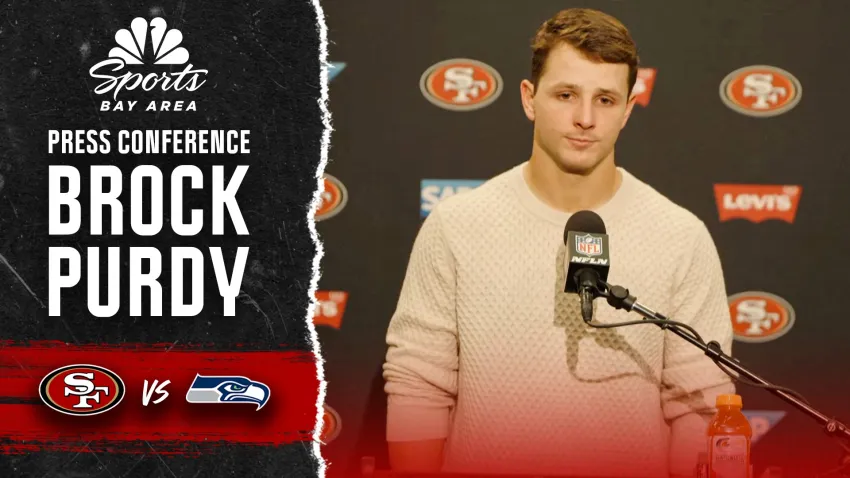
Now consider the image of a quarterback stepping away from a team bus. As a symbolic portrait, it invites viewers to imagine the quieter side of professional football. The cheering eventually stops. The cameras disappear. The stadium empties. What remains is the obligation to prepare for another opponent and another week of scrutiny.
For Purdy, the stakes are especially high because San Francisco has begun the season without a loss. Every victory strengthens the team's position, but it also raises expectations. Opponents study the offense more closely. Analysts examine potential weaknesses. Supporters begin imagining what might happen in January.
The undefeated start is impressive, but it guarantees nothing. The NFL season is long, physically demanding, and capable of changing direction with a single play. Maintaining success requires more than talent. It requires resilience, adjustments, and the ability to recover from mistakes without losing confidence.
That may be the most compelling part of Purdy's story. He does not need an unverified tragedy to make his journey emotional. His transformation from the final draft selection to the leader of an unbeaten team is already remarkable. His willingness to examine failure, confront difficult opponents, and trust his teammates provides a powerful narrative grounded in reality.
And perhaps that is what the imagined moment beside the team bus ultimately represents: the contrast between the public celebration of victory and the private responsibility that comes with leadership.
San Francisco's fans see touchdowns, victories, and the promise of another postseason run. Purdy must see the next defensive scheme, the next opportunity to improve, and the next challenge awaiting his teammates.
The question is no longer whether Brock Purdy belongs on the biggest stage. The question is how far he can lead the 49ers while carrying the enormous expectations that come with being their quarterback.